
Building shared judgement across Mars's global finance teams
 Mars set out to align financial leaders across global markets on a three-year value creation strategy. The environment was complex, with competing priorities, different regional speeds and constant scrutiny. Every decision carried weight, and leaders were expected to interpret financial levers and communicate decisions consistently, wherever in the world they were working.

When judgement varies, momentum breaks
In a programme of this scale, inconsistent judgement under scrutiny is riskier than any gap in technical knowledge. If leaders read financial levers differently from market to market, three things follow:
Decisions slow down as regions second-guess each other
Commercial outcomes become harder to predict
Alignment breaks down exactly when pressure rises
The readiness gap
Mars's leaders already understood the mechanics of the strategy - that was never in question. What they hadn't done was apply it under pressure:
No realistic scenarios to test their response to cross-functional pressure
No chance to rehearse the timing of an escalation before a real one arrived
No shared reference point for what a "good" decision looked like across regions
That gap in practice, not knowledge, is what widened performance between markets.
Rehearsing financial decisions before they went live
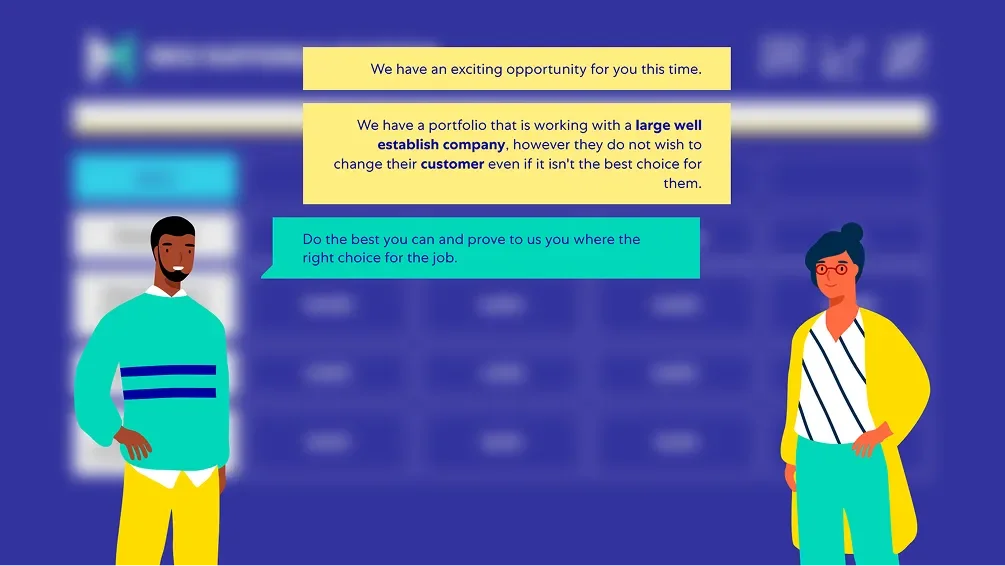
Totem built a structured rehearsal environment where leaders practised the decisions they'd otherwise only make live. No two paths through the simulation were the same, so the branching mirrored the real unpredictability of a global strategy in motion.
Three elements did the work:

Branching scenarios
Scenarios changed with every decision, so no leader saw the same situation twice.

Real financial trade-offs
Financial levers and value-creation trade-offs to test, not just read about.

Immediate consequences
Compressed consequences, so leaders could see the outcome of a call and adjust before it mattered for real.

The performance shift
The shift showed up fast. Leaders who'd rehearsed the strategy's complexity stopped hesitating over difficult calls and started responding consistently across markets that had previously drifted apart. In practice, that meant:
Faster decisions, because the ambiguity had already been worked through once
A shared judgement language across regions, instead of local interpretations of the same strategy
Stronger cross-functional collaboration when conversations turned genuinely high-stakes
The Results
of participants reported greater clarity
Following the rehearsal, 100% of participants reported greater clarity in communicating and measuring value creation across the business. That's not a marginal shift — it's the behavioural alignment the entire three-year programme depended on, achieved before leaders were exposed to live scrutiny rather than during it.
The evidence bears out what the rehearsal was designed to do: practice, not information, is what makes judgement consistent when regions, priorities and pressure all move at once. For Mars, performance readiness now sits alongside strategic planning as a condition of the programme's success, not an afterthought to it.