
Knowledge isn’t enough. Rehearsal builds readiness.
Behavioural simulations create realistic environments where your people can practise judgement, navigate complex situations and experience the consequences of their decisions before those decisions matter in the real world.
Because when performance matters, practice does too.


Most training explains the process. Very little prepares people for reality.
People rarely struggle because they don't know what to do. They struggle because real situations introduce factors that traditional learning can't replicate – like pressure, ambiguity, and emotion. That’s where performance becomes inconsistent, and learning fails. Because you need your people to be able to perform in the imperfect reality of the world – not just in idyllic scenarios.
That’s where simulations add value, allowing your people to experience real-world scenarios, without any repercussions. From e-learning to VR, behavioural simulations transform the learning experience.
How do behavioural simulations improve performance?
Allow your people to practise complex judgements before they encounter them in the real world.
Explore competing priorities, schedules and challenges without real-world risk.
Build confidence in situations where there isn’t always an obvious right answer.
Allow mistakes to happen during rehearsal, rather than when they impact your bottom line.
Create a shared standard of judgement across your team – boosting efficiency and staff morale.
When performance matters, simulations build readiness.
If people need to apply judgement in the real world, information-based training is not going to prepare them for reality.
Simulations are great for:
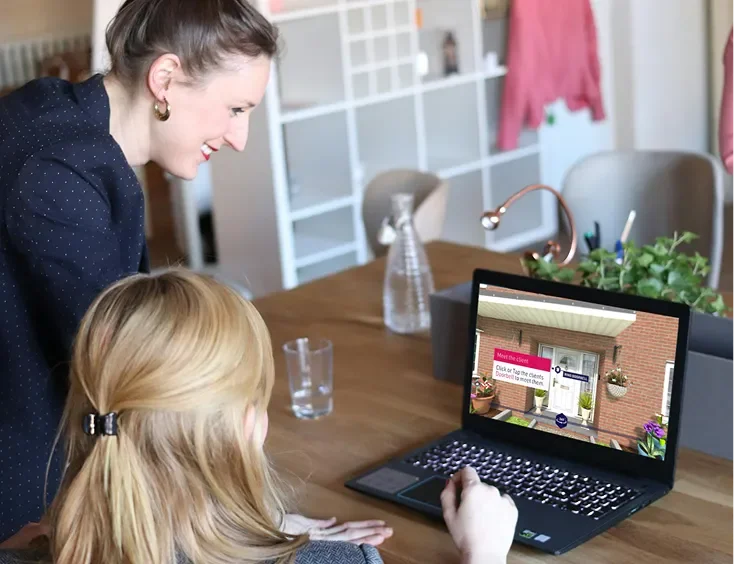
Simulations that unlock behaviour: That’s the Totem way.
We don’t build simulations to entertain, we build them to reveal behaviour. Every Totem simulation is designed around one question: What do people actually do when conditions become difficult?
To answer that question, we focus on realistic scenarios, meaningful decisions and visible consequences. Because engagement alone doesn’t create capability – practice does.
The Totem way in action:
Identify where performance breaks down
Define critical decisions and behaviours
Design realistic rehearsal environments
Measure behavioural change
Refine and improve
Rehearsal
Rehearsal before exposure.
When Mars launched its Global Integrated Value Creation Programme, the challenge wasn’t really about helping leaders understand value creation. It was ensuring they could apply the knowledge consistently before decisions became complex, visible and commercially significant. Across the organisation, leaders needed to navigate ambiguity, interpret financial levers and make sound decisions under pressure, in a globally consistent way.
-
100%
Agreed the learning journey helped them understand, communicate, measure and support value creation across the organisation
-
93%
Aould recommend the programme to colleagues
-
93%
Agreed the game gave them real practice in reflection and decision-making
To solve this problem, we created a behavioural simulation for leaders to rehearse strategic financial decisions and navigate uncertainty. Through dynamic scenarios, employees had the opportunity to test value creation levers, experience the consequences of their actions and refine their judgement through repeated practice. The result was more than increased knowledge and understanding, every participant reported greater clarity on how value creation should be communicated and measured at Mars, through a shared language and approach.

When performance matters, your people need more than information.
Give your people the opportunity to practise, fail safely and build confidence before the stakes are real. If you're ready to create learning that improves judgement, confidence and performance, let's talk.