
Rehearsing the conversations staff were avoiding
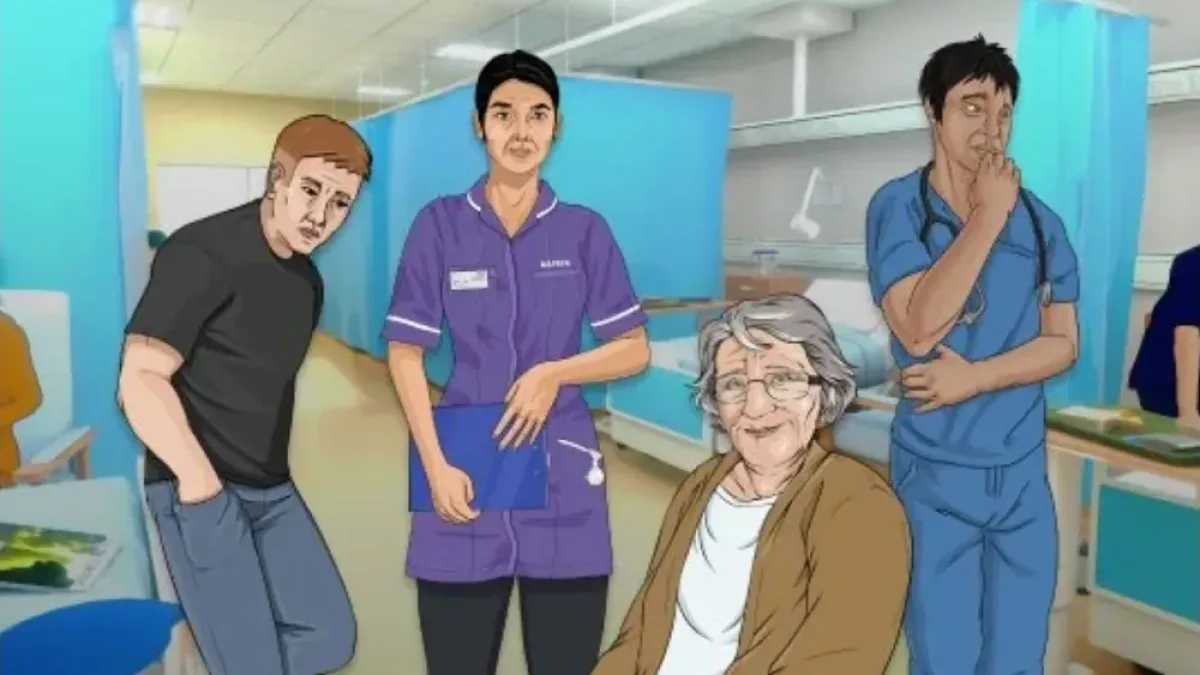
 NHS staff work in high-pressure, time-poor environments where colleagues and patients often show quiet signs of distress before anyone says anything. Spotting those signs and starting a supportive conversation takes empathy, awareness and confidence - skills staff are expected to have, but rarely get the chance to practise before they're needed for real.
Walking past costs more than words
When staff aren't sure what to say, many say nothing at all. Left unaddressed, that hesitation compounds:
Early signs of distress go unnoticed or unspoken
Burnout and absenteeism rise across teams already under pressure
Patient care suffers when colleagues aren't supported to keep going
The readiness gap
Most staff understood Mental Health First Aid in principle - the guidance existed, and people had read it. What they hadn't done was practise saying the actual words, in the moment, to a real colleague. On a busy ward, there's no safe place to try:
Opening a sensitive conversation without a script
Reading body language accurately under time pressure
Knowing how to respond if the conversation doesn't go to plan
Knowing the theory of support and being ready to offer it turned out to be two different things.
Rehearsing difficult conversations, safely, first
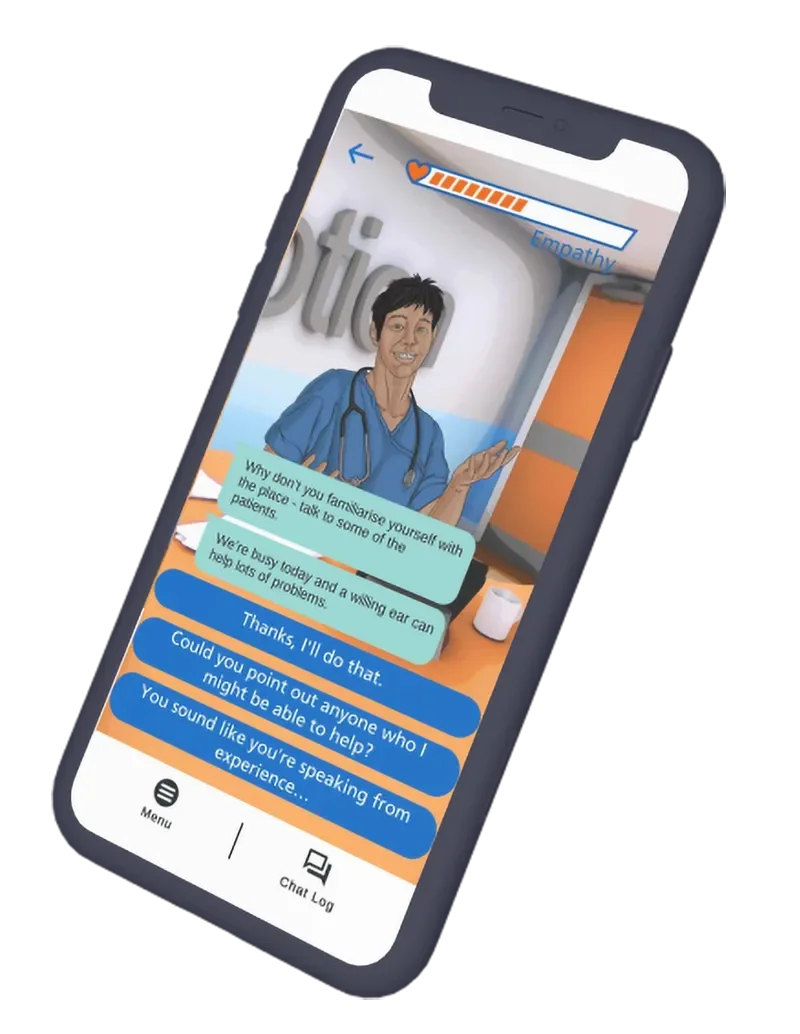
Totem built Don't Walk Past, a digital rehearsal space developed over three months with three hospitals, so the scenarios reflected real staff and patient experiences rather than generic examples.
It trained three specific skills:

Conversation
Branching dialogue scored in real time for empathy, not just correctness.

Observation
Reading facial expression and body language to catch what wasn't said.

Investigation
Reviewing each pathway afterwards to see the impact of different approaches.

The performance shift
Staff who'd rehearsed these conversations stopped hesitating when the real moment came. Instead of walking past, they had a shared way of opening up support that didn't rely on guesswork:
Faster interventions when signs of distress appeared
Stronger peer-to-peer confidence across teams
Mental Health First Aid principles applied under pressure, not just remembered from training
Results
Support offered in the moment, not after it
Across three hospitals, staff used the rehearsal space to explore multiple narrative outcomes, see the direct impact of their choices, and get signposted to further support where it was needed – turning a training exercise into an active safety net. The clearest signal wasn't a single statistic, but a shift in behaviour: staff who'd rehearsed a difficult conversation stopped avoiding it. For an environment where every day brings genuine pressure and genuine stakes, that's the outcome that matters – colleagues supported before a quiet struggle becomes a crisis.