
Stabilising supply chain judgement under pressure
 Supply chain managers work in a fast-moving, data-heavy environment where one team's decision ripples across the whole network within hours. Balancing inventory, reading market signals and coordinating across departments all happen at once, and the margin for a bad call is thin — a single overreaction can set off disruption that takes months to unwind.
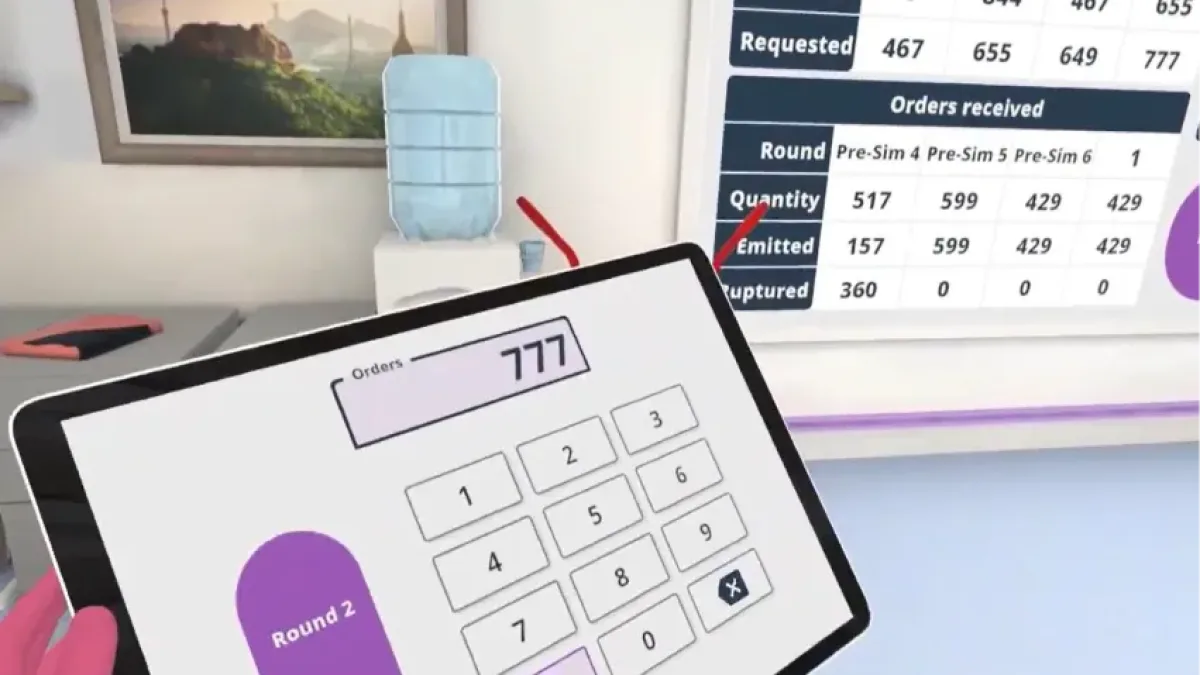
The bullwhip effect, live
Small shifts in demand can cascade into major disruption further up the chain - the classic bullwhip effect. When teams misjudge a signal or act without coordinating:
Inventory swings out of control across the network
Operational costs escalate fast, often before anyone notices
A single misjudged decision under pressure can cost millions
The readiness gap
Managers could explain the bullwhip effect on a spreadsheet without hesitation – the mechanics were well understood. What a spreadsheet can't teach is what it feels like to make that call live, with a market moving and other departments waiting on the decision. Before this programme, teams had:
No experience of the real-time pressure a demand shock creates
No chance to see how their decision rippled into another department's numbers
No way to test cross-functional coordination except during an actual crisis
They understood the theory. They'd never had to act on it under fire.
16 players, one live market, real pressure
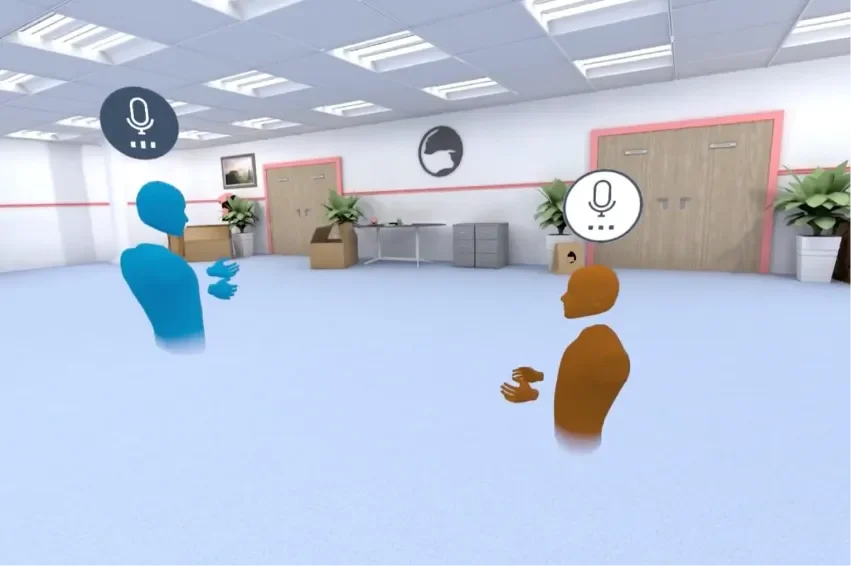
Built with Skema Business School, Bears & Bulls is a multiplayer virtual reality simulation for up to 16 participants, split into cross-functional teams of four, working inside a live, moving market. It centres on three mechanics:

Real-time market response
Shifting inventory and demand that respond in real time to every team's decisions.

Facilitator-driven volatility
A facilitator who can inject new goals or trigger volatility mid-session.

Repeatable scenarios
Fully repeatable scenarios, so difficulty and dynamics can be tailored each time.

The performance shift
Rehearsing the volatility changed how managers responded to real friction afterwards. Reactive, siloed decisions gave way to coordinated ones, because teams had already seen how their choices rippled elsewhere:
Stronger cross-team collaboration under pressure
A shared judgement language for talking about trade-offs
Calmer, more proactive responses when the market actually moved
Results
Rehearsed before it's real
By rehearsing the bullwhip effect without any real operational risk, teams closed the gap between academic theory and live execution. Participants stabilised simulated disruption faster and more efficiently with each repetition, and left with hands-on experience that a spreadsheet exercise had never given them. The clearest takeaway was cultural as much as technical: understanding a concept and being ready to act on it under pressure are different things, and only rehearsal builds the second. For these cross-functional teams, that gap is now something they've already closed once, before the market ever tested them for real.