
Rewriting instinct before it costs a life
 Shipping crews make hundreds of safety-critical decisions a day, often under real, immediate risk to life. Crews are also highly multilingual, so procedures have to hold regardless of a person's first language. When an emergency hits, there's no time to think it through from scratch - people fall back on instinct, whatever that instinct happens to be.
When instinct overrides protocol
In an emergency, learned instinct beats stated procedure almost every time. If that instinct hasn't been shaped by the right protocol, the consequences aren't administrative - they're physical:
Crews default to natural reactions that conflict with safety procedure
Language barriers mean the same instruction lands differently across a crew
Inconsistency under pressure becomes a genuine safety risk, not just a compliance gap
The readiness gap
Traditional video training delivered the rules clearly enough - crews could describe the correct procedure when asked. But watching a protocol on screen and overriding instinct in a real emergency are not the same skill, and video only ever built the first one. On top of that:
Text-heavy instruction excluded much of a genuinely multilingual workforce
Nobody had a safe way to test their reaction to a simulated emergency
Default behaviour under pressure had never actually been rehearsed, only described
The rules were known. The instinct underneath them wasn't. Crews who rehearsed the emergency retained the protocol - not just the memory of watching it.
A 3D rehearsal built around real emergencies
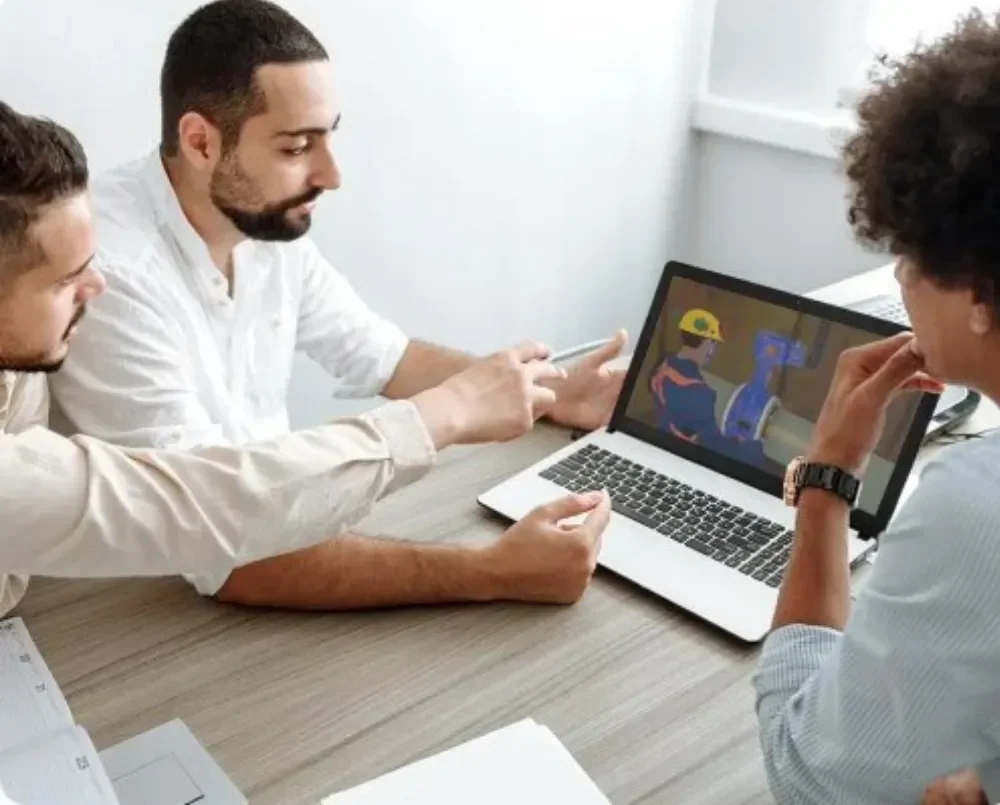
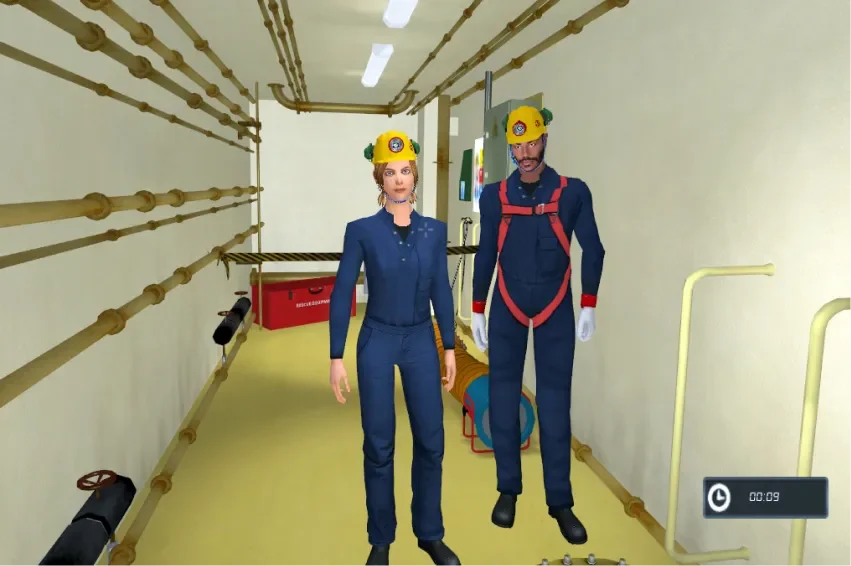
Totem and Videotel built a 3D digital rehearsal environment that mixed everyday procedural tasks with sudden emergencies, forcing crews to act rather than watch.
To reach a multilingual workforce, the whole experience was designed around three principles:

Visual, not verbal
Visual, interactive mechanics instead of language-dependent instruction.

No warning
Realistic emergencies dropped into ordinary tasks, without warning.

Immediate consequences
Immediate, visible consequences for every choice, so crews could feel the cost of the wrong instinct safely.

The performance shift
Rehearsing the emergency changed what crews did by instinct, not just what they could describe. Panic gave way to protocol-aligned action, and the visual format meant it held regardless of first language:
Calmer, more consistent responses when a real emergency hit
A shared safety standard across a genuinely multilingual crew
Faster recognition of a developing situation, before it became critical
Results
The results: Safety protocol that held under pressure
Moving from passive video to active rehearsal changed engagement as well as outcomes – crews returned to the simulation voluntarily, rather than treating it as a compliance box to tick. More importantly, Videotel recorded markedly higher retention of safety protocol and a clearer translation of that knowledge into real-world behaviour on board. The lesson wasn't subtle: watching a procedure and being ready to override instinct with it are different capabilities, and only one of them can be built by rehearsal. For an industry where the cost of getting it wrong is measured in lives, that difference is the whole point.